Showing posts with label Gearóid Ó Loingsigh. Show all posts
Gearóid Ó Loingsigh ☭ writing in Substack on 8-June-2026.

Photo: GOL
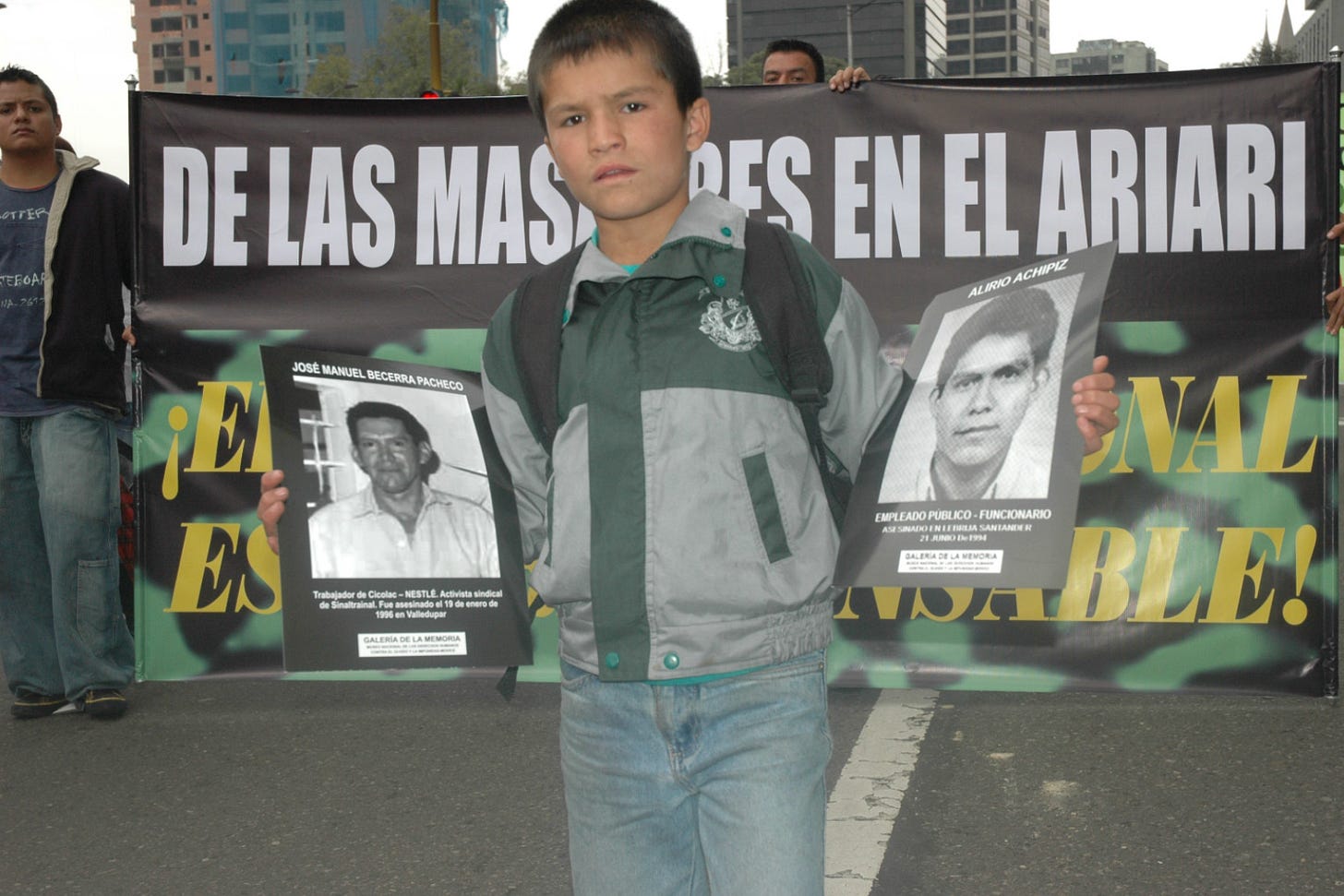
The right-wing extremist, apologist for crime and man lacking in any moral virtues won the first round of presidential elections in Colombia. He surprised everyone, both on the right and the left. Now the people are mobilising in Colombia’s streets and a huge effort is being made to avoid the next Colombian president being a Latin fascist. If he wins the future will be very turbulent and violent for the social organisations, the left and the country itself. It will also be the case if he loses.

De la Espriella is further to the right than Uribe Vélez in everything. He is also more openly violent in his political tendencies and proposals as much as in his private life. The lawyer for the right-wing paramilitaries, drug traffickers and an advisor to the paramilitaries in Santa Fe, de Ralito and a man who said that ethics have nothing to do with law. Such a person will govern without any ethics, or rather with the ethics of the murderer, the thief, the human rights violator. He will return the country to the 1980s and 1990s when every president pretended that the military killed no one. However, De la Espriella, just like Bukele in El Salvador, sees no need to fake anything, other than empathy.

It will be a more violent and extremist government than any from the past and the international context helps them in that. For decades Colombian social democrats have looked to the USA and Europe to save the country. Some of them even promised us that Obama would save the country. Such stupidity was common amongst the NGOs. There is nothing wrong in denouncing human rights violations in international settings, even before capitalist institutions such as the European Parliament or the US Congress but trusting in them to put an end to such violations when their companies are the beneficiaries, instigators and in many cases the direct agents in massacres is naïve. However, it is true that sometimes the international institutions have helped soften a situation, but never have they put an end to it. To believe that others will save Colombia and not the Colombian people is not just naïve it is dangerous. The international context will favour the worst excesses of De la Espriella should he become president.

The NGOs used to take advantage of the conjuncture and the supposed international commitment to human rights. This commitment was always conditional but there was a consensus that western powers, should, at least, pretend to be worried and sometimes the social democratic forces in Europe took some steps, when they were in power, or forced other political forces to some something minimal. Their willingness to do so, depended on the interests at stake and the implications for themselves. But times have changed. We see a live streamed genocide and they didn’t bat an eyelid. The USA threatens half the world and they remain silent or they support it, such as is the case with Ukraine and Iran. Even more worrying in the case of a victory for the extreme right in Colombia is that in Europe the same governments the human rights NGOs would lobby are in a campaign against all rights to dissent and engage in attacks on their own people.

In Germany the police arrest people for wearing a T-Shirt with the Palestinian flag or a keffiyeh. They violently attack peaceful protests. Germany expels or denies entry to other Europeans who support the Palestinian cause like the former minister for finance in Greece, Yanis Varoufikis. In Britain the police arrest pro-Palestinian activists, amongst them blind people, old people, priests and processes them under anti-terrorist legislation. When some activists began a hunger strike the government remained firm, as De la Espriella would say, and some of them came close to dying. They also charge pro-Palestinian doctors and try to have their medical licences revoked, not for malpractice but because of their political positions. They have reached the point of going after people for the posts on social media and not just over Palestine but also other issues. During the social explosion of 2021 in which the Colombian police murdered 84 people in a short period, the European Union remained fairly quiet and limited itself to calls for calm. Now under a De la Espriella government that represses the opposition they are not going to say much, bearing in mind that human and civil rights are also under threat in Europe.

In the USA, ICE searches houses without a warrant, arrests citizens and migrants without due process and the president does what he feels like. The international setting favours the Bukele, the Milei and the De la Espriella. Colombia’s social democrats have lost the consolation of European and Yankee “support”. They will have to fight and if the youths come out on the streets again, they will have to support them, materially, publicly, explicitly and of course not betray them as Petro did, leaving them to rot in prison. The extreme right has discounted half measures and you can’t fight them with conciliatory half measures.

Some have called out for a supposed centre that never existed in Colombia. It is not that there is no centre in Colombia, just that it is not what they say it is. The nearest thing to a centre in Colombia, is the Historic Pact. In any other country, it would be seen as such being a liberal/social democratic party, with some members more to the left and others more to the right. What it is not, is a socialist party. It says a lot about how right-wing various professional commentators are that they see in the Historic Pact, Fidel Castro entering Havana. One would wish it were so, but unfortunately it is not, nor will it be. 

Whether a constituent assembly is convenient now or not, is a legitimate debate, but such an assembly is a right people have. Ask for one or not does not place Cepeda on the left, just like their opposition to an assembly does not place them in the supposed centre, though the right-wing don’t usually like assemblies where people get to make decisions. What they really want is for the HP to go further to the right, forming alliances with the “run of the mill” right like Claudia López, responsible for the murder of 14 youths in the protests against the murder of Javier Ordónez at the hands of the police in 2019. Some point to the ex-presidents as a supposed centre. They are all, without exceptions, implicated in the dirty war and it is depressing that they aim to make us think otherwise and that one has to read, not the manifestos of that “left” in the Congress or the commentators from the supposed centre to know what they did, but rather the communiqués from the period of organisations such as Amnesty International. Sipping good whiskey can affect the memory, apparently. Or maybe De la Espriella is not the only one lacking in empathy. These commentators are as much a part of the problem as the bourgeois press itself. They don’t want the country to change too much, they are living it up.

One of the problems of Petro’s government and also Cepeda’s campaign is a lack of clear left-wing proposals. Petro’s attempts to change the health system in Colombia, lacking a majority, ended up as negotiations with right wing forces in Congress, amongst them the supposed centre the commentators want an alliance with. Petro was lacking in audacity. It was also a negotiated process with the health companies such as the Spanish Keralty Group. A simple proposal, which is also simple to understand is a universal health system. To say to the people that if you come down with something minor we will tend to you to the last moment. If it is serious, likewise. If it is chronic or acute also and your income doesn’t matter as it is a universal system and so it is free.

What if Cepeda wins?

But if on the other hand, the mobilisations following the first round and the efforts the Historic Pact bear fruit and Cepeda wins, the problems won’t go away. The right-wing will simply open up another battle front. One of the first to congratulate De la Espriella was extreme Venezuelan right-winger Corina Machado and he wasted no time in returning the accusation of fraud and asked the USA for help to ensure he victory in the second round. Trump heard his call and declared his support as he has done with many authoritarians around the world. If Cepeda wins, the rabble in the opposition campaign will not hesitate to carry out a campaign similar to the Venezuela right-wing asking for sanctions, pressure and if it comes to it and the moment is ripe - ask for a military strike like in Venezuela. Petro has already laid the groundwork in that sense. He ceded to Trump on many things, narcotised his discourse on the armed conflict and spoke of a dictatorship in Venezuela. The abject cowardice he showed will come back like a boomerang. If Cepeda wins, it cannot be discounted that sooner or later they will talk of a dictatorship.

Following June 21st the fight will require fighting, something Petro never understood. The social democrats will also have to fight even if they manage to hang on to their jobs, which is what concerns many of them, though not them all.

⏩ Gearóid Ó Loingsigh is a political and human rights activist with extensive experience in Latin America.

Turbulent Times Ahead After Elections In Colombia

Gearóid Ó Loingsigh ☭ writing in Substack on 3-June-2026.

Photo: GOL.

Sometimes the presidents of Colombia go down in history not just for what they did but rather for what they said. The most stupid of them like Duque (2018-2022) for phrases so lacking in eloquence like “What are you talking about mate? in response to a journalist asking about a bombardment in which children were killed. Others such as Uribe (2002-2010) left us an endless list of quotes amongst which stands out“They weren’t picking coffee” his infamous justification for the murder of defenceless youths, known as the false positives that took the lives of 7,838 youths.

Ernesto Samper (1994-1998) also handed down various expressions. In my opinion the worst one was not what he said about drug money entering his electoral campaign but rather his comments on proposals for a new military code that would exclude certain crimes the military jurisdiction and pass them over to the ordinary justice system and that Due Obedience would not be accepted as a justification in human rights cases. Samper stated that:

As President and commander in chief of the Armed Forces I prefer to see the military fighting the subversives in the mountains and not in the country’s courts responding to groundless charges presented by their enemies.[1]

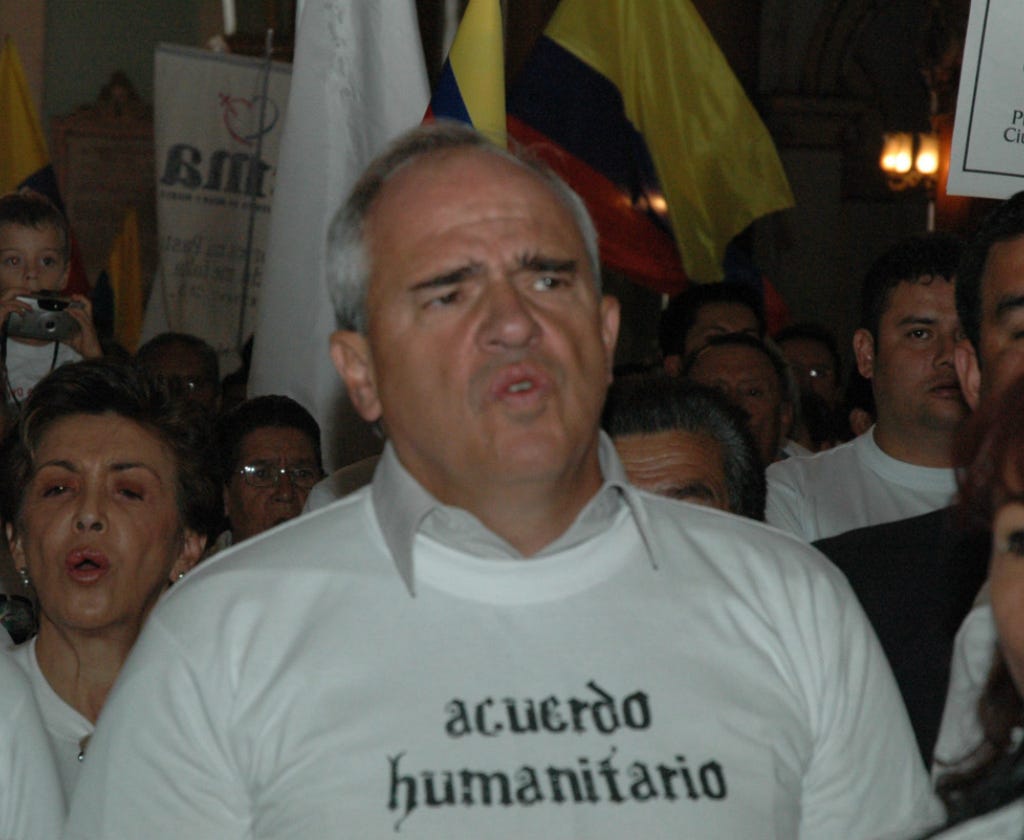
It does not sound like the statement of a human rights defender, and as president he wasn’t one. But he turned up in the midst of the election campaign, nodded his head every once in a while, putting himself forward as a human rights defender. He did something similar in Petro’s campaign and even before that the Communist Party invited Samper to their congress where he gave a speech in favour of peace.[2] They put behind them the scandals that dragged his government through the mud such as his tooth and nail defence of the CONVIVIR, the legal façade given to right wing paramilitary groups, created under a decree from president César Gaviria and his minister for defence Rafael Pardo that Samper implemented or the Faceless Justice System, another of Gaviria’s inventions that Samper enthusiastically applied, jailing more than one communist using false and cloned witnesses.[3] Samper is now seen as a man of peace, a human rights defender, a man far removed from the armed conflict of the country. When he was president, nobody spoke of him in such terms. And nobody means nobody. Not even many of the Historic Pact that nowadays have their photos taken with him and share on social media as part of the electoral campaign.

Samper has always denied having any responsibility for the armed conflict and the human rights violations under his presidency. To himself, his government was a blameless government of little angels in the flesh. Samper will be remembered for his expression “it was all done behind my back” in reference to drug money entering his election campaign. He said it so vehemently that he seemed to forget that he was the candidate that the money benefitted. In truth, as far as Samper was concerned everything bad about his government was done behind his back.

In 2007 he got into an argument with Myles Frechette, the US ambassador to Colombia during his government, over the issue of paramilitaries, the CONVIVIR, and the general human rights situation. Samper replied in the best style of Uribe Vélez and with a gall on a par to him.

That high-ranking officers of the armed forces of the country were linked to favouring paramilitary groups is totally false, it is just a strategy to discredit the government of the period.[4]

He took us for fools. To name just two: the generals Rito Alejo del Río and Uscátegui. Rito Alejo was in 1997 the general in charge of Operation Genesis in Urabá in which troops under his command operated in alliance with the paramilitaries. In 2012 he was sentenced to 25 years. Rito Alejo del Río was a key player in the paramilitary network, or as Javier Giraldo describes his long and bloody record, he was a “bulwark for the paramilitaries”.[5] Uscátegui was sentenced to 37 years in 2009 for the massacre of Mapiripan that also occurred in 1997 when Samper was president. There is also the case of Captain Rodrigo Cañas and the pool hall massacres in April 1996 in the town of Segovia. Not as a high a rank as the other cases, but it is noteworthy as Cañas was sentenced to 50 years and never set foot in his place of detention: the Tolemaida military base. No one knows where he went. Perhaps to Israel, perhaps he joined the paramilitary groups. No one knows.

Even in the cases in which the Colombian justice system worked Samper opted for congratulating the military on their dirty work, as in the case of Nydia Erica Bautista:

Following an unprecedented decision by the Procurator Delegate for Human Rights, in September 1995 an army brigadier-general in active service was dismissed from the armed forces for responsibility in the abduction, torture and murder of a political activist in 1987. The dismissal of Brigadier-General Alvaro Velandia Hurtado was strongly opposed by senior military commanders and sectors of Colombian Congress who attempted, unsuccessfully, to reinstate him. Following the Procurator Delegate’s initial call for his dismissal, General Velandia was decorated by the commander of the armed forces, on the order of President Samper. (bold not in original).[6]

Samper always defended the military and denied that they violated human rights. In response to a resolution of the European Parliament in October 1996, he stated without blushing:

It is not true, that the Colombian security forces have developed an emergency strategy, characterized by aid to paramilitary groups, extrajudicial killings, torture and disappearances.[7]

Throughout his presidency human rights groups took advantage of Samper’s pretty and public discourse on human rights to make a series of recommendations. Samper accepted the state’s responsibility for the Trujillo massacre that took place before his presidency, but despite the requests made he never implemented the recommendations of the commission of investigation. Various organisations also asked him to enact a law making forced disappearance a crime in compliance with Art. 12 of the Colombian Constitution. Amnesty International publicly requested he do so in September 1994 two months after he took over the presidency.[8] He didn’t do it; it fell to his successor Andrés Pastrana in the year 2000. Samper did little of what he was asked and following the murder of the lawyer Eduardo Umaña Mendoza, Amnesty did not hesitate in demanding that the “Colombian Government should tackle pattern of attacks against human rights workers”[9]

In June 1997 human rights defenders presented the Colombian Government with a series of proposals to help guarantee their safety. These included a call for members of the security forces responsible for human rights violations to be brought to justice, and for effective action to be taken to dismantle paramilitary groups. Human rights defenders also called for those members of the security forces supporting or operating in unison with paramilitary forces to be brought to justice.
If the Colombian Government had taken such decisive action Dr. Umaña Mendoza and other human rights workers might still be alive. (Bold not in original).[10]

It was worth remembering that Umaña was a reference point for almost all those who are now in the Historic Pact and more than one of those who pose for photos with Samper. Samper is spoken of in terms that nobody used when he was president. Towards the end of his term, Amnesty International wrote an open letter to him that all those who back Samper now should read. It is very telling and the parts cited here describe him in terms that few dare use nowadays.

During your administration, Mr President, human rights defenders have been persecuted on an unprecedented scale. More defenders have been killed in the last four years than during any previous government. Despite repeated commitments to protect human rights defenders your government has relinquished its responsibility and has preferred to hide behind euphemisms attributing the attacks to “fuerzas oscuras” (“dark forces”) which, it is claimed, can neither be identified, confronted, nor held to account.
The indifference of your government to the plight of those who peacefully seek to protect human rights and the basic principles of democratic society has constituted at best gross irresponsibility and at worst criminal negligence…
The ambivalence of your government towards human rights organizations has allowed and quite possibly encouraged the escalation of attacks against defenders. Despite statements recognizing the legitimacy of their work, the failure of your government to take action against members of the armed forces, in active service and retired, who falsely accuse human rights defenders of links with subversive organizations has sent a clear message that the campaign of extermination will be tolerated…
It is, therefore, the incontrovertible responsibility of states to guarantee the free exercise of the right to promote and defend human rights. States are fundamentally obliged by international law to protect and promote this right, to prevent it from being threatened, restricted or suppressed and to protect the liberties and security of those who exercise it. Your government, Mr President, has singularly failed to fulfil that obligation.[11]

Amnesty International is a human rights NGO, but it is usually very diplomatic in the language used, so the tone of the letter is telling. Those that rehabilitated Samper and praise him despite the fact that he continues to deny the brutal record of his government, are traitors. They have betrayed the defence of human rights. They insult the memory of the victims of Samper’s government and reduce paramilitarism to just one president: Uribe Vélez, despite the role of all presidents’ in paramilitarism being well documented. Rewriting history in this way and cleaning up the image of such a person is an act of corruption.

Here I have laid out a brief presentation of Samper’s record. On the issue of human rights his record is long and includes states of exception that gave special powers to the military, reduced the age of criminal liability to 14, house searches without a warrant, censorship etc. It is also the case in economic terms, the surrender of natural resources, his attempt to introduce a mining code that favoured the multinationals and in passing his own companies.[12] It is a long list, with enough for not one but many books, doctoral theses even. 

Samper as president did everything that the members of the Historic Pact criticise, and despite this, they have him there as one of the stars of the moment. How little historic memory and dignity they have. I hope their reward for grovelling to such a person is worth it. The inclusion of people like him in the Historic Pact’s campaign says a lot about the poverty of their proposals, the lack of audacity and vision.

References

[1] AI (1996) Colombia a deepening human rights crisis. 

[2] Semanario Voz (21/07/2017) Unidad para construir un nuevo país . 

[3] As the witnesses identity was not known the same “witness” would appear in various different processes as if a different person in each case.

[4] Caracol (31/03/2007) Frechette: ‘El gobierno sabía que las Convivir se estaban convirtiendo en paramilitares’. 

[5] Giraldo, J. (2003) El General (r) Rito Alejo del Río: baluarte del paramilitarismo bajo el blindaje de la impunidad. 

[6] AI (1996) Op. Cit. p.4

[7] HRW (1996) Colombia’s Killer Networks. 

[8] AI (18/09/1994) Colombia: Further information: “Disappearances”: President must promulgate draft law against “disappearances” and new concern: Death threats. 

[9] AI (20/04/1998) Colombian Government should tackle pattern of attacks against human rights workers. 

[10] Ibíd.

[11] AI (18/05/1998) Colombia: Open letter to Colombian President Ernesto Samper Pizano. 

[12] Ó Loingsigh, G. (2003) La Estrategia Integral del Paramilitarismo en el Magdalena Medio. p.71 

⏩ Gearóid Ó Loingsigh is a political and human rights activist with extensive experience in Latin America.

Rewriting The History Of Colombia 🪶 The Rehabilitation Of Samper

Gearóid Ó Loingsigh ☭ writing in Substack on 27-May-2026.


The conflict in Cauca between the Nasa and Misak indigenous peoples for land has left a toll of seven dead. All of the dead are indigenous, not one bourgeois, not one landlord, and neither are there any high ranking government officials, police or military i.e. nobody who influences or decides upon land policy. I am not asking for them to kill anyone, just pointing out that in the land war they killed each other, whilst others sipped coffee at home. However, the indigenous are not the only dead. Various governmental and non-governmental discourses on agrarian reform also died, discourses on indigenous organisations, in particular the Regional Indigenous Council of Cauca (CRIC) and the perspective on who are the agents for change in Colombia.

The dispute is centred around an 800 hectare plot of land and a resolution on its fate acknowledging a colonial deed in favour of the Nasa. They are not fighting to take over a 2000 hectare farm belonging to one of the racist oligarchs in Cauca. No, not that. That would require a fight against the state and the rich. The Department of Cauca is one of the most unequal in terms of land distribution. The majority of peasant farms are no more than 1.5 hectares.

Since the founding of the INCORA (Colombian Institute for Agrarian Reform in the 1960s the state’s policy on agrarian reform has been one of market led agrarian reform. The peace accord signed by the FARC does not used the term, agrarian reform but rather rural reform (which are far from being the same thing), but what it proposes is for the state to buy lands and share them out amongst some, though not all peasants. This model does not break with the power structure in the countryside, in fact it strengthens it. State policy is to promote a type of agrarian reform where the peasant is obliged to grow cash crops, industries which are dominated by the large landlords and oligarchs in Colombia.

This model places peasants, indigenous and blacks in a fight amongst themselves for crumbs. This is not the first episode of this nature though the death toll is noteworthy. Once upon a time the Colombian left used to denounce a market led agrarian reform. They stated bluntly that there will a land market or there will be an agrarian reform but both of these proposals cannot coexist.

The land dispute between the Misak and Nasa will not be resolved in a piecemeal fashion. That much is clear. What is required is the regularisation and expansion of the indigenous reserves along with an agrarian reform for the peasants. To do it bit by bit is to invite the indigenous, peasant and black communities to fight amongst themselves for each portion.

Another discourse that died is in relation to indigenous organisations. There are sectors of the left, particularly those close to the now demobilised FARC who denigrate the indigenous peoples and their organisations whilst other sectors idealise them and concede a protagonism to them and their organisations that they often do not deserve. Sometimes they came to Bogotá to protest the situation in Cauca and put forward their demands. Other times they came to support national mobilisations. But in reality they arrived to usurp the moment and try to impose their agenda, as if the future of the country was settled in Cauca. In the large social explosion of 2021 the CRIC joined the strike a few days later and said they were going to Cali. They saw in the strike another opportunity to present themselves as the salvation of the country and in passing lambasted the urban youth fighting in the streets of Cali and Bogotá, vilifying them as vandals:

We are really going to begin the strike. Because now we see how the city of Cali and the department of Valle de Cauca are being militarised in order to continue repressing the Colombian citizens demands for their rights. We also call upon the vandals to not tarnish the process of the Minga and the national strike.[1]

They tried to reduce the national strike to just another episode in their Minga and the strike as an ancillary activity, and claim the strike began in earnest because they joined it a few days later. In fact in their communiques they always talked about the Minga and the national strike, and in that order. It was a brazen attempt to impose their agenda on a national agenda. But they did not last long in Cali and by May 11th they withdrew, not just because it went badly for them, as it is not the same to fight in the territory that they know than an urban city, but also due to political questions.[2]

Nonetheless, the CRIC is accepted as a permanent reference point, unlike other indigenous organisations, when it doesn’t always deserve to be so. The indigenous peoples are like any other community. There are left wingers and there are also right-wing sectors, amongst them the ex-governor of Cauca Floro Tunubala, who following his term of office went to work with the Coca-Cola Foundation, which is not exactly renowned for its defence of Mother Earth. There are others still that aim to do deals with mining companies in exchange for money. 

I took part in an event in the UAIIN (The Indigenous Autonomous Intercultural University where I explained the social, ecological and cultural damage that gold mining would bring and following my presentations a leader warned those in attendance that whilst my interventions were interesting, Colombia needed the gold i.e. to allow the entry of mining companies. Other leaders, however, invited me to hike through their reserves carrying out a series of workshops with the indigenous communities. The indigenous peoples and their organisations are like those of the peasants and urban sectors. There are all sorts. But some sectors of the Left treat them as icons that cannot be criticised. They have even gone as far as the ridiculous point of trying to replicate indigenous rites and ceremonies in events. The Colombian Left has a problem with religious mysticism and superstition and not just in the case of the indigenous. More than once I have had to momentarily withdraw from a secular event, where I was a speaker, whilst a priest or religious person (generally Catholic) blessed the event. It is shameful but common amongst an incoherent Left.

According to some sectors of the Left, the indigenous have an ancestral millennial knowledge. All cultures in the world come from times past. In some cases we can talk of centuries and even millennia, but all those cultures have changed. The idea of a static millennial culture is just as racist as the colonial vision of indigenous cultures. But now that those peoples with their ancestral knowledge and unique wisdom have murdered each other in a fight for land and against an administrative decision of the National Land Agency, where is that unique wisdom? It doesn’t exist because it has never existed.

Their organisations are like the rest of Colombia, with a particular vision that competes with the rest. In the case of the CRIC it is worth highlighting that it is an indigenous organisation, an NGO and a company that tenders for state contracts and manages a significant chunk of the state budget. So far, under the current government it has signed contracts for 405 billion pesos (roughly 100 million US dollars).[3] Some of them are health related matters and ethno-education, legitimate and necessary things. Though when they hire indigenous teachers for ethno-education they don’t always get good contracts but rather short term contracts etc.. There is a worsening in working conditions compared to the whites they replaced. This is called capitalism and job insecurity a la CRIC. It is worth pointing out that this is not something new under Petro’s government but rather also a reality under the governments of Duque and Santos.

So let the idea of indigenous organisations as the vanguard of social struggles die! There is nothing special about them. They represent a variety of positions, some progressive others openly reactionary. They are simply one political current more in the country and deserve the same respect as other organisations. They are social organisations with wide support base and have played an important role in various struggles at various times. But no more than that. We should no idealise them just like we don’t idealise trade unions that nowadays are a source of corruption and sometimes act as brake on the struggles of their members. We should also remember that the CRIC is just one indigenous organisation. There are many more.

The response to the massacre of indigenous in Cauca has been very poor. And it was a massacre, a massacre being the murder of four or more people in the same space and time. For example, the Congress of the Peoples asked both groups to engage in dialogue and harmony.[4] It was very soft. I cannot conceive of a situation where workers in two different unions in a company murdered each other and all is asked of them is dialogue and harmony.

The market led agrarian reform is buried in the tombs of the dead whose blood spilled on the fields of Cauca in a fight between the poor and not against landlords or the state. The market led agrarian reform is individual, not collective, and always puts some poor in a fight against others, though in the majority of cases the fight is bureaucratic and administrative and does not result in violence, though it is always ideological. It is never against the state and the oligarchy. And all the ancestral wisdom did not give the Nasa or the Misak greater knowledge about their real enemy.

References

[1] RNC (30/04/2021) Para Nacional: el CRIC anuncia que se unirá a las manifestaciones. 

[2] CRIC (13/05/2021) El Paro Nacional y el CRIC: La lucha continua. https://www.cric-

[3] El Tiempo (03/07/2025) Los detalles del nuevo millonario contrato entre el Cric y el gobierno: sería el quinto en lo que va del 2025. 

[4] See Communiqué (22/05/2026) Mensaje de armonización y lucha. 

⏩ Gearóid Ó Loingsigh is a political and human rights activist with extensive experience in Latin America.
Land Conflict in Cauca, Colombia 🪶And The Massacre Of Indigenous People

Gearóid Ó Loingsigh ☭ writing in Substack on 16-May-2026.


The proposals to eradicate coca always include some version of crop substitution. The debates are usually around how it is to be done and whether to include some proposal for the development of the regions, such as roads, schools and so forth. They rarely look at why there is an increase in illicit crops and how the proposal for substitution contributes to it.

The peasant didn’t choose the wrong crop. The decision to grow coca instead of manioc, for example, is not an erroneous decision by the peasant. It is an economic question. The peasant calculates which of the two crops has a greater market or is more profitable. This aspect is accepted by almost everyone. So the state proposes an alternative crop to compete with the profitability of coca. The state implicitly accepts that there are other factors to be borne in mind and acknowledges that the poor state of the roads is an important factor in most regions and often there is a lack of infrastructure relative to the crop, processing plants, wholesale collection points etc. But the proposals ignore a fundamental aspect. What bankrupted the Colombian countryside and impoverished the peasantry was neoliberalism.

In the history of the expansion of illicit crops and their use to make cocaine we can point to key moments in different countries. Many academic texts talk of the collapse of the price of tin in 1986 and the impact it had on the Bolivian economy. But it is not true. The price of tin did not collapse but rather it was collapsed. Until 1985 there was in place an international agreement that regulated the price. The termination of that agreement provoked the fall in the price of tin, and up to 20,000 miners went to the Chapare region to grow coca for purposes other than traditional use, amongst them one Evo Morales the future president of the country. And coca production took off, and Bolivia became, for a period, an important player in the cocaine business.

In Colombia the economic aperture of César Gaviria wrecked the countryside, and later came the collapse of the international agreement on coffee. The price of green coffee fell, whilst the price of roasted coffee rose. As Colombia, is even today, a producer of green coffee and not so much roasted coffee this impacted the Colombian countryside. It is the third largest producer of green coffee in the world in terms of volume and value after Brazil and Vietnam. 

In 2024 Colombia exported 655,611 tonnes of green coffee, but the real profits are made with roasted coffee and Colombia barely exported 12,064.78 tonnes compared to Switzerland’s 111,185 tonnes, Italy’s 294,476 and Germany’s 258,672. Switzerland exported roasted coffee worth USD 3,91,239,000, Italy USD 2,748,238,000 and Germany 2,189,120,000. Colombia barely exported USD 105,998,000. This means that Colombia, the third largest producer of coffee in the world, exported coffee worth about 1.2% of the value of the three European countries where the only coffee plants are in the botanic gardens. In fact, the value of all Colombian exports of both green and roasted coffee is just 40% of the value of roasted coffee exports of those three countries in the north. But these countries, as strange as it seems, export green coffee that they obviously don’t produce. Their botanic gardens couldn’t even produce one sack of it. For example, Germany exported almost half the green coffee of Colombia. Its exports were the equivalent in value of 46% of Colombia’s exports (USD 1,609,535,000 compared to USD 3,439,384,000). In terms of volume, Germany exported 321,425,320 tonnes, almost half that of Colombia’s 655,611,110.[1] Berlin’s botanic garden must be very productive or better still the European companies dominate everything. I should point out that here I have not included figures from the USA as their production is for internal consumption, though it is the largest market.

It is worth remembering that coffee is one of the products that they say will save the peasant when he replaces the coca. The proposal makes no sense if you really believe that they aim to save the peasantry. It only makes sense when you realise that it is not about saving the peasantry but rather transforming the countryside. Francisco de Roux who was the head honcho at the Programme for Development and Peace in Magdalena Medio was clear about it:

The peasant has to associate with the large scale processes that make the land of Magdalena Medio interesting for large investments. And those projects are the permanent tropical products. If the peasant doesn’t get into this, he is going to leave the region.[2]

It is an ideological proposal to deepen the process that began under the government of César Gaviria: a countryside without peasants but rather rural workers. It is a proposal from the Colombian right including the paramilitary groups that set it out in their proposal Plan for Regional Macroeconomic Integration for Sustainable Human Development, the Substitution of Illicit Crops and Peace for the Municipalities that make up the Civil Association for Peace in Colombia, more popularly known as the Macroeconomic Integration Plan.[3] It is also a proposal from a wide range of foreign governments, NGOs, journalists and of course agribusiness companies.

Through the tale of crop substitution the PDPMM managed to establish large scale African palm crops in Southern Bolívar and expand cocoa, rubber, and coffee crops there and in other parts. Also in Tibú when the right wing paramilitaries supposedly demobilised they came in with full force to plant palm. Before the paramilitary demobilisation there was just 500 hectares in all of North Santander and now there are 43,859 hectares, mainly in Tibú. As much in Magdalena Medio, Tibú and other parts the beneficiaries of the crop substitution programmes were not necessarily coca growers. Palm, cocoa, rubber and other cash crops were imposed where there was no coca. It was just an excuse and in many cases they did not keep their word with the peasants as one peasant rubber farmer from Santander explains:

It came here as crop substitution but in this area there wasn’t any [coca]. They came along with the tale, saying in the workshops that it was the pension for the people that planted it. That it was one of the most profitable crops in the world… They guaranteed its sale, something which never happened, those who extract rubber have to see where they can sell it and those who sell it have to wait three months for payment.[4]

Nowadays, with or without the excuse of crop substitution, the promotion of cash crops is state policy. Petro never stops talking about it. When he proposed buying land from those who financed the right wing paramilitaries in order to share it out amongst the peasants he said it was so the peasant would grow cash crops. The idea is of a Colombian countryside full of rural workers producing those crops that are raw materials for northern multinationals. In exchange Colombia imports basic foodstuffs that it used to produce. The problem the country has is that Europe and the USA can stop consuming the produce of Colombia but Colombia cannot stop importing its food. Now with the crisis in the Persian Gulf, Europe can decide that that cash crops from Colombia are a luxury that it no longer needs, but Colombia needs rice, beans and other foodstuffs and it has to import them regardless of the price of fuel.

The central argument for crop substitution is that the peasant chose the wrong crop before falling on hard times. He grew manioc or some other foodstuff and couldn’t survive on the sale of those crops and opted for coca as a very profitable crop. They say there are other crops that are profitable and don’t bring with them the social problems of coca, such as violence, prostitution, pollution and the disintegration of the social fabric etc. The softest version of this accepts that there are some structural factors such as the lack of quality roads, education, health services, etc. in the regions and they promise to do something about it. However, they ignore the central problem.

Neoliberal policies caused the crises in the Colombian countryside and in other countries. The plan was to turn Colombia into a pantry of exotic products for Europe and the USA. The plan has met with some success, as nowadays 70% of the arable land in Colombia is under six crops with coffee and palm accounting for 27.9%. The country imports basic foodstuffs that it used to produce and the regions are increasingly specialised in a small number of crops exposed to the ups and downs of the market, the rapid advance of infections in the monocultures, the loss of biodiversity and the complete absence of participation in value-added processes. They propose to speed up this process, inserting the Colombian countryside to a greater degree in the international market in exchange for little or nothing. If neoliberalism pushed the peasantry towards coca, the solution according to these nutcases is more neoliberalism.

Every country in the world exports a part of its agricultural production. It is normal and even desirable, depending on the conditions in which it is done. But if you want to substitute coca with other crops, not only do you need roads in good condition, but also native crops and a local, regional and national economic circuit where the crops are transformed within the country and what is exported is, insofar as possible, the final product. It is incredible that Colombia does not dominate the roasted coffee market or that it imports refined sugar, or that its rubber production is not of sufficient quality for the car industry. Having so much land, it is incredible that it imports basic foodstuffs. The required changes in the countryside are more than giving out free seeds or chickens to peasants but rather changes to the free trade agreements, that the food needs to be processed in the country. In other words the countryside just like industry requires a vision and real planning to meet the needs of the country and not those of the international monopolies of a handful of products. The countryside is for Colombians not for Nestlé or Unilever. Neither is it for the national monopolies in Colombia. Any half measure is another victory for neoliberalism and those who pushed the peasants into coca production with all the problems this has brought to the country.

Of course, to struggle against neoliberalism is to struggle against capitalism itself. There is no nice capitalism and the options are not between a neoliberal capitalism and one from some other golden age. Of course, those who talk of crop substitution never talk of socialism. This is not surprising. What is strange is the social organisations and the left don’t talk about socialism either in the context of drugs, illicit crops and the challenges to the peasantry and the working class. They believe that drugs and crop substitution is far removed from class struggle: naïve fools.

References

[1] All figures are taken from faostat.org

[2] Interview with Francisco de Roux April 2002.

[3] Ó Loingsigh, G. (2002) La estrategia integral del paramilitarismo en el Magdalena Medio. España. 

[4] Cited in Ó Loingsigh, G. (2019) Extractivismo y muerte en el nororiente de Colombia. EJP. Bogotá. pp. 131 y 132. 

⏩ Gearóid Ó Loingsigh is a political and human rights activist with extensive experience in Latin America.
Coca And Crop Substitution 🪶A Neoliberal Victory

Gearóid Ó Loingsigh ☭ writing in Substack on 5-May-2026.

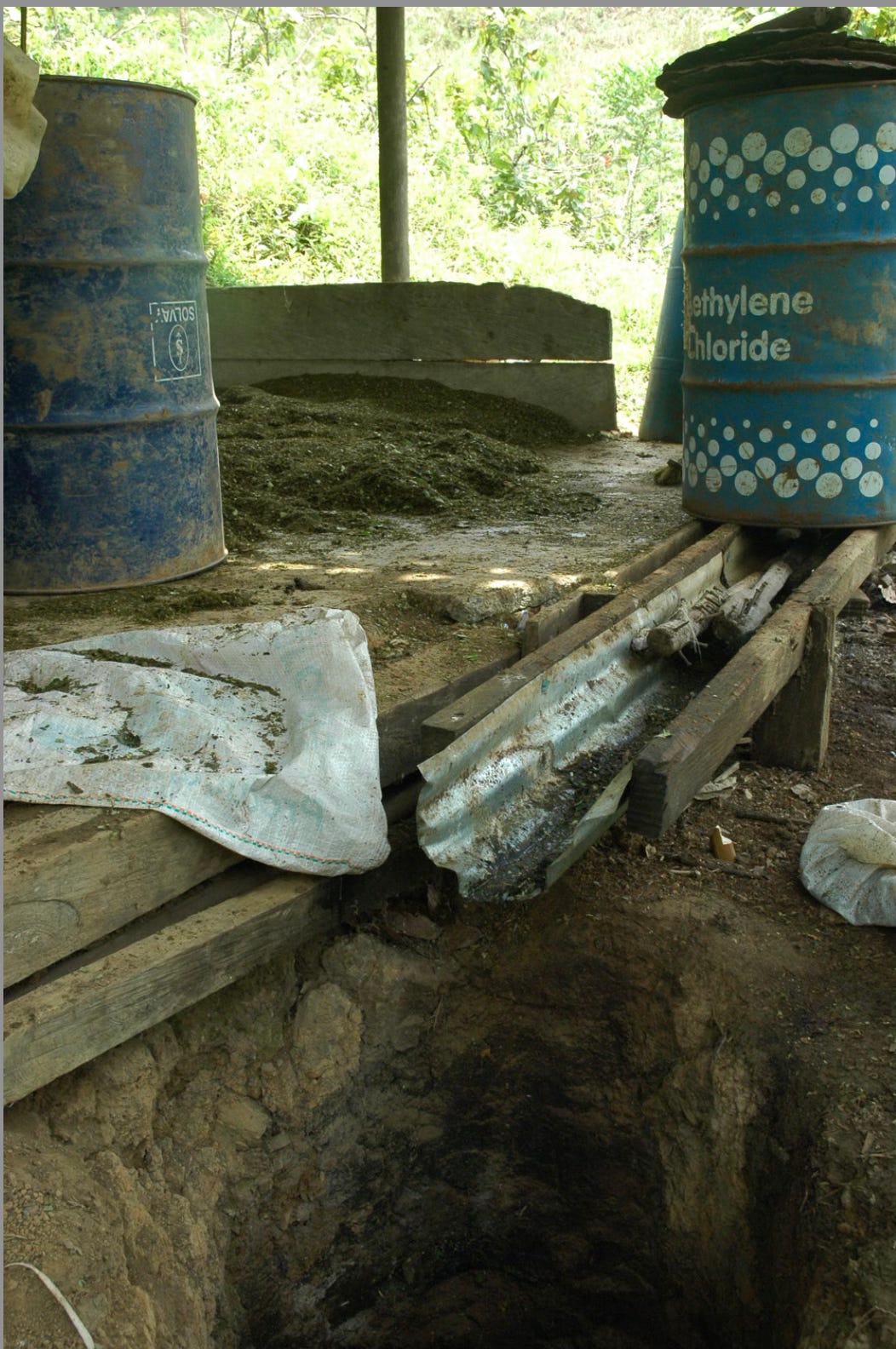
Photo: GOL: Cocaine laboratory, Catatumbo.

The drugs issue is never far from the news in Colombia, nor from political, economic, peace proposals and so forth. But there are rarely real debates on how to proceed. They are limited on the one hand to continuing with the prohibitionist model and all that it entails: prison, fumigations, military operations, the destruction of lives and a fake discourse that is used to justify counterinsurgency operations. And on the other hand there is the proposal for legalisation, which can be heard from time to time but as it has never been a central element of the debates in Colombia, it remains undeveloped.

I would like to explore some of the implications of breaking with the prohibitionist model and I would like to state beforehand that I am in favour of doing so, but it what it means and how to do it has to be discussed. I begin with a brief history of the prohibitionist paradigm, to then go on to put forward some aspects to bear in mind when we propose to bury the rotten corpse of more than a century of attempts to reduce the consumption of some, though not all drugs, through repression. This article is partly motivated by the statement from the ELN that for the second time proposes the legalisation of drugs. However, it is not a response to the ELN. What it puts forwards is for all of society and many elements dealt with have been discussed in other settings around the world, though in Colombia it is a nascent debate.

The origins of the prohibitionist paradigm

When we say we are in favour of legalising certain drugs we fall into a mistake that cannot be easily corrected in the public imagination. What we really mean is relegalising, as it was once the case that the recreational use of drugs such as heroin, cocaine, cannabis and other derivatives of plants such as opium, coca and cannabis was perfectly legal. Moreover, the consumption of those drugs was more commonly associated with the monied classes. It is not for nothing that the fictional detective Sherlock Holmes was portrayed as an opium and cocaine addict.

In the USA the impetus behind the prohibitionist movement came from Christians and their campaigns against alcohol in the 19th century and the later campaigns against opium. They were moralistic campaigns against all types of stimulus, a moralistic element that never quite disappeared. Realpolitik is of greater importance nowadays, but it is frequently wrapped up in a moralist and/or religious discourse and is rarely treated as a public health problem. However, the US’s own interest was not a moral crusade against what the Christians saw as a moral degeneration of society, but rather the economic and geopolitical interests of the emerging superpower that was the USA.

The British Empire carried out, not one, but two wars against China (1839-1842 and 1856-1860) for the right of its drug traffickers to import opium from India, which was at the time a British colony comprising the modern countries of Pakistan, India and Bangladesh. The US thought that promoting a prohibitionist agenda would favour them in their economic relations with China. So the first international conference was the Shanghai Conference of 1909, where the colonial powers under the auspices of the International Opium Commission met to discuss the future of the opium trade. Prior to that the US began to take internal measures against consumption such as the Pure Food Act of 1906 and then following Shanghai the Harrison Act of 1914.

After 1909 a number of international treaties on the trade in opium and other drugs were approved in the years 1912-1953, the first of them being the Hague International Opium Convention. In 1961 all these treaties were subsumed into one document, the Single Convention of 1961. As its name indicates the idea was to replace all the previously existing treaties. In the prior discussions, the prohibition of alcohol, as some Islamic countries wanted, and tobacco were discounted. The reason behind not including these two drugs had nothing to do with public health, but rather western economies made a lot of money from those two activities which they dominated. Any attempt to ban wine, beer, whiskey would have led to the negotiations failing. This point is important, as at no stage were they concerned about health as both those drugs at the time killed more people in the northern countries than any controlled substance. It continues to be the case nowadays and we can state without fear of contradiction that tobacco and alcohol kill more people in the entire world than all illegal drugs together.[1] In the USA it is calculated that around 480,000 people die from smoking per year.

So it was that the three prohibitionist conventions of the UN were passed. There are those who state that technically speaking these conventions don’t ban anything but rather regulate, and it is true, but they regulate to the point that with the exception of medicinal and scientific use there is no difference between their regulation and prohibition.

The first one is the Single Convention of 1961. This is the most relevant convention for Colombia. It prohibits various substances, such as opium and also cocaine. But, moreover the said document bans the coca plant itself and obliges states to destroy wild plants. Article 26.2 reads:

The Parties shall so far as possible enforce the uprooting of all coca bushes which grow wild. They shall destroy the coca bushes if illegally cultivated.

And Article 49.2(e) demands that “Coca leaf chewing must be abolished within twenty-five years from the coming into force of this Convention.''  Even coca tea was banned, Article 27.1 states that:

The Parties may permit the use of coca leaves for the preparation of a flavouring agent, which shall not contain any alkaloids.

No indigenous community extracts the alkaloid from the leaves they sell to make tea, nor do they have the technology to do so. However, they may be bought in many parts, but if US or European Customs finds a packet in your case it can have serious consequences, even though many tourists take the risk every year.

The second convention, that of 1972 basically regulates synthetic drugs such as LSD and pharmaceuticals and unlike the coca leaf or cocaine, the drugs covered by this convention are subject to national regulations more than anything. And lastly there is the 1988 Vienna Convention that deals with the issue of trafficking itself, the precursor chemicals and money laundering, amongst other things and obliges states to introduce national legislation to challenge trafficking, production, money laundering, possession etc. The northern countries were so concerned about the dynamics of power that it took them 27 years following the Single Convention to do something about their own role in the illegal drugs industry.

This is the international institutional set up on drugs.[2] Now when drug legalisation is being proposed, or breaking with the prohibitionist model what is being proposed is a battle with the UN institutions, the member states, particularly the most influential ones in the INCB (International Narcotics Control Board),and the CND (Commission on Narcotic Drugs such as the European countries and the USA.

There are various options. One is to unilaterally break with all of the prohibitionist institutions. It is not very feasible, it would provoke a furious reaction from not only the USA but also the European Union, the imposition of economic sanctions and even a military invasion with the eternal excuse of a war on drugs. There are economic consequences to breaking with them in this fashion, trade relations, membership of certain international institutions etc. Perhaps a group of countries breaking like this could work, but we have seen how almost all the countries in Latin America did nothing about the kidnapping of the Venezuelan president, Nicolás Maduro or the blockade of Cuba. We have to doubt their word. Colombia promised to resist the USA and quickly got down on its knees.

You can try to reform it from within. This option is not as easy as our social democratic friends in the NGOs would have us believe. The UN General Assembly is not going to vote for substantial changes to the treaties and the bureaucratic set up. Neither will they accept amendments. Bolivia tried to put forward an amendment on the traditional consumption of the coca leaf  18 countries objected and it had to withdraw from the treaty and sign up again with a reservation, a legally doubtful manoeuvre that has caused tensions in the system.

Uruguay legalised the production and sale of cannabis for medical and recreational purposes entering into conflict with the international treaties. It was not a simple nor easy path and it has caused some difficulties for the country, not least with its banking system. There exists home growing, cannabis clubs and sale through pharmacies. Each option is tightly regulated by the state and each citizen can obtain a maximum of 40 grams per month. Uruguay immediately ran into a problem that can happen to any country that tries to throw off the yolk of prohibitionism. The sellers of legal cannabis in places authorised by the state itself could not deposit their profits in the banking system, not even with the Bank of the Republic. They had to resort to methods akin to money laundering in order to circulate their lawfully earned money.[3] Something similar happens in various states of the USA where the recreational sale is allowed. Not even an internal legalisation is without risk, so much so that the American Bankers Association has fought for years for a change in federal banking legislation regarding the legal sale of cannabis in various states.[4] It is worth bearing in mind that what they propose is to legislate for the entry of money from the legal sale of cannabis in the USA and at no stage do they deal with the question of money coming in from banking systems outside the USA.

Public Health

Part of the proposal to legalise drugs and break with the prohibitionist paradigm is to treat it as a public health issue. Even in European countries that have not broken with prohibition many elements of the public health model are to be found, due to pressure from their own societies, medical associations and of course grassroots organisations that campaign against prohibition.

What does it mean to treat it as a public health problem?

Well, first of all we would have to release all those prisoners sentenced for non-violent drugs offences and not imprison any more people for the same offence. It is relatively simple as the treaties demand that states pursue trafficking and consumption, but do not lay down specific sentences for each crime. So a state does not have to imprison consumers, broadening the own use concept and being creative with the penalisation of each crime. But that brings a series of problems with it. If it is not a criminal matter but rather one of health, then the health system has to be up to the task. So detox centres are required, psychologists, social workers and a whole series of social supports for the drug addict who obviously can’t have access to a health system that is different to that which the rest of the population gets. In the case of Colombia, there is absolutely no chance of decriminalising or legalising drugs and treating it as a public health issue under the current system. None! A total structural reform is required in which health takes precedence over the profits of health companies i.e. a national health system. A free public high quality system for all citizens, without exceptions, with prompt attention. Sometimes in the spiel that some come out with on the issue they forget that drug addiction is not a problem of capitalism, it has always existed but the current levels are specific to capitalism and cannot be resolved with market based solutions. This can be seen in countries which have tried it out.


All of this generates economic costs, which I believe as a society we should be willing to pay, but we shouldn’t fool ourselves. There are costs to be paid. The public health proposal generates enormous expenses which require a rethinking of the health system. In fact, I don’t really believe that under capitalism that drugs can be successfully treated as a public health problem, though progress may be made on various aspects. It is worth recalling that amongst the commissioners from the Global Commission on Drugs[5] that the ELN has as an interlocutor is the former Colombian president Cesar Gaviria who privatised the health system in Colombia through Law 100 and made medical care in the country unreliable. That man is not interested in treating drug consumption as a public health problem but rather as an opportunity for private gain.

In the private health system there are companies that provide health services. Their aim is not to cure nor save lives but to generate profits. In fact, their legal duty to the shareholders is to generate the highest rate of profit possible within the legal framework of the country. And in order for a private company to be profitable the public health system must be weakened just like Cesar Gaviria and Juan Manuel Santos did. Patients in the public health system must experience greater problems in being seen by specialists, exams, medicines etc. They must get sick more, not be cured in a timely fashion and some must die. Otherwise the patient has no reason to pay into the private system. The private companies are genuine merchants of death, just like all the politicians who are part of the Global Commission, and not just the Colombians. So we have to fight not just for the legalisation of drugs, but also against the merchants of death and their health systems.

There is a hippy tale that legalisation would mean the inward flow of great resources to the state with which any health programme could be financed. This hippy tale is part of the cheap talk from Petro’s milieu and his inept functionaries who live off it. The truth is another matter. First of all part of the final price is due to its illegal nature and the price would fall with legalisation.

If Colombia legalises cocaine and opium, this won’t generate large profits for the country. Just like in Bolivia, the coca leaf could circulate freely within the country and perhaps the medicinal cocaine as well for use in Colombia only. Under no circumstances will the INCB authorise Colombia to compete with the legal crops in Peru that are harvested to produce medicinal cocaine. The medicinal cocaine market is very small. The INCB calculates the global needs and authorises the traffic of this product to the hospitals and laboratories of the world. According to its most report, Bolivia produced 25,728 tonnes of coca leaf for traditional uses in the framework of the reservation it made when it adhered again in 2013 and the global production of licit medicinal cocaine reached just 377.4 kilos.[6] The global production of licit medicinal cocaine is small in scale and Colombia needs the permission of the INCB to trade and compete with the Peruvian production. It should be pointed out that Peru produces the leaf and not the final product, which is under the control of the northern countries. The principal producers are the US and Britain which account for 90.3% of world production and Britain is at the same time the main exporter.[7]

Something similar can be seen with cannabis production, a market dominated by Canada which accounts for 45% of global production with 248.2 tonnes, followed by Britain with 95 tonnes or 17.2%. Canada is also the main exporter of medicinal cannabis with 145.8 tonnes or 57.3% of global exports. Colombia accounts for less than 2% of global production and 4.6% of exports with 11.7 tonnes.[8]

If the production of recreational cocaine is legalised we face the same problem as with the medicinal cocaine: quality. The cocaine produced in the mountains does not meet the requirements of the medicinal market and neither would it meet those of a hypothetical recreational market and it would most certainly be the Canadian and British companies which would come to dominate such a legal market for recreational cocaine. So, as happens with coffee, the value added and the largest share of profits would be generated outside of Colombia, unless in addition to breaking with the prohibitionist model there was a break with imperialism and the way in which it dominates countries in the south and markets for primary products such as coffee, tea and other cash crops.

None of this means that we shouldn’t break with the prohibitionist paradigm. All it means is that the challenge is enormous, greater than what some naïve social democrats believe. It requires inverting the current health model around the world, breaking with imperialism and its domination of global markets for southern products. It is not easy but the debate has to be a serious one bereft of the naïve when not deceitful declarations that characterise the majority of NGOs in Colombia.

References

[1] To delve deeper into the role of the USA in the development of prohibitionism see Bewley Taylor, D.R (1999) The United States and International Drug Control 1909-1997. Pinter. New York.

[2] For an overview of international drugs treaties see Sinha, J. (2001) The History and Development of the Leading International Drug Control Conventions. Prepared for the Canadian Senate. Library of Parliament 

[3] Galain, P. (2018) Mercado regulado de cannabis vs. política bancaria. ¿Un mercado obligado a operar fuera del sistema financiero? Revista Penal No. 42. Tirant Lo Blanch. Valencia. pp 82-98. 

[4] See communiqué.

[5] See.

[6] UNODC (2026) Narcotic Drugs 2025: Estimated World Requirements for 2026. P.14 

[7] Ibíd., p.54

[8] Ibíd., p.53

⏩ Gearóid Ó Loingsigh is a political and human rights activist with extensive experience in Latin America.
What If We Legalise Drugs In Colombia?

Gearóid Ó Loingsigh ☭ writing in Substack on 23-April-2026..

Foto: GOL, Nariño, Colombia

A new president will take power next August 7th. It is expected that it will be Iván Cepeda, though his victory is not in the bag yet. There is still a chance the extreme right-winger De La Espriella, the lawyer for the corrupt, drug barons and paramilitaries, may win. In the case of Cepeda being the new president the deadlock in the dialogues between the insurgency of the ELN and the state may be solved. In such a situation the drugs issues will once again be spoken of.

We already know from his repeated statements on the issue that the president, Gustavo Petro knows nothing about it. Time and again he has said things that are just simply not true, a subject I have dealt with in previous articles.[1] In July 2022, the ELN made a public declaration on drug trafficking and their disassociation from the industry, reproducing a letter sent to the Global Commission on Drugs Policy.[2] This commission argues for a human rights focus and changes in the paradigm preferring regulation over prohibition and it also argues for harm reduction amongst consumers. It is made up of former presidents, including those of Colombia, such as Juan Manuel Santos (2010-2018) and Cesar Gaviria (1990-1994) whose neoliberal policies played a decisive role in the expansion of illicit crops in the country. It is also includes the former president of Brazil Fernando Henrique Cardoso (1995-2002) and former diplomats and businessmen like Richard Branson, a topic I will deal with further on.[3] At that time the ELN made various proposal on criminal policy, health and other things without any deep development of them. Recently the ELN once again made its position on drug trafficking public. As was to be expected they disassociated themselves from the issue and once again stated that it was not the position of the ELN to be involved in any of the stages of the production and commercialisation of cocaine. Thus far fine, but the document contains various statements that are problematic in terms of understanding the issue of drug trafficking. It asserts that:

Drug trafficking is one of the main economic activities that guarantees a widespread reproduction of capital, with high rates of profit and is totally controlled by the USA and its three international agencies, DEA, CIA and FBI. Furthermore, the USA has proclaimed itself to be the supreme judge to issue moral verdicts on drug trafficking that allows them to condemn, certify or absolve people or countries according to their economic, political or military interests.[4]

Without doubt illicit drugs are an important industry and play a role in the world economy, but its weight should not be exaggerated. Drug trafficking represents less than 1% of world GDP. As the UN points out in its World Drugs Report“Although the largest illegal incomes from drug trafficking are generated in destination markets, they only represent a small proportion of the national economies of relatively high-income countries.”[5] Less than 0.5% in the case of Europe, and in some cases it even contributes less than interdiction efforts or treatment.

Of course there are regions where it has greater weight. For example in Afghanistan, drug trafficking accounted for 25% of GDP in 2023(Between USD 4.6 and 5.9 billion).[6] The legal drugs market, however, is larger than that of illicit ones. If we are talking about the accumulation of wealth the pharmaceutical sector moves more money globally and the development of its products is subsidised when not wholly financed by the states and they receive a patent on the product that eliminates or substantially reduces competition depending on the pharmaceutical. In 2023, the sales of pharmaceuticals amounted to USD, 1.6 trillion compared to around USD 650 billion from illicit drugs with a profit rate of between 40% and 90% depending on the pharmaceutical.[7] It is worth pointing out that given that it is an illegal industry and clandestine the figures for the illicit drugs are calculations and there are differences between the sources cited, but in general terms they all indicate that the legal industries are many times more larger than the illegal industries.

Another industry that is very profitable and a lot more so than drug trafficking are the arms industries and military expenditure. In 1961, General Eisenhower retired from public life passing the presidency on to Kennedy. In his farewell speech he warned about the rise of what he termed the military industrial complex.[8] But he was no pacifist and he was not opposed to arming nor using weapons, but he looked on with concern at the development of that industry. Nowadays, a modern Eisenhower would have to say that we have reached the point he feared. Global military spending in 2025 was USD 2.63 trillion. Of that the USA represented USD 921 billion, China 531.4 billion, Russia 523.6 billion followed by Germany with 107.3 billion and Great Britain with 94.3 billion. The military GDP is equivalent to the GDP of all the countries of Africa combined. Extreme poverty could be ended with just over 10% of that. It is clear that the war industry is the main one and just like the pharmaceutical one it receives juicy subsidies and state contracts.

The businesspeople of the world, including drug traffickers and the banks that launder their assets take part in that industry. Not only do the capitalists of the powerful countries do so, but also almost those from nearly all countries in the world. Colombia is not an exception to that. In 2024, Petro’s government allocated USD 7.73 billion for military expenditure and USD 8.09 billion in 2025, representing about 1.9% of GDP, far from the contribution of illicit drugs. It is worth pointing out that despite the existence of the state company Indumil, Colombia buys its most expensive weapons such as planes and boats and does not manufacture them. Though Petro has begun to change that. And this brings us to the role and contribution of drug trafficking in Colombia’s GDP. According to the ELN:

In Colombia due to a policy decision of the state drug trafficking became the main economic activity (bold not in original) and being the main global exporter of cocaine it has fused the main national economic business groups with transnational capital and finances the paramilitaries to carry out the antisubversive war and state terrorism.[9]

Let’s start with the easiest part which is actually true. Yes, it is true that drugs trafficking financed paramilitarism in Colombia. It an historical fact and I would say, a current one that cannot be denied. Though it is not clear what the ELN means by the expression “a decision of state policy” and how it made drug trafficking the main economic activity in the country, nor how it fused national economic groups with international capital, other than criminal groups. The insertion of the Colombian bourgeoisie in the world economy is an historic constant, it is neither new nor recent. Of course, Cesar Gaviria’s economic aperture of 1992 accelerated and strengthened it. But to say that drug trafficking is the main economic activity of the country, makes no sense. It is an important economic activity. But the Colombian economy is more diverse than drug trafficking. The illicit drugs industry represents 4.2% of Colombian GDP. It is very important, but when we compare it to other sectors of the economy, we see that the ELN does not take into account the most basic data on the issue. Its contribution has varied over time. As Portafolio reported.

For Daniel Mejía, professor of the Andes University, the impact of this reality is that the weight of drug trafficking in the Colombian economy is more than 4%, an historic high. “ In 2008 that proportion was equivalent to 2.3% of GDP and five years later it fell to its lowest point, 1.2%.[10]

Moreover, according to the DANE (National Administrative Statistical Department), the information and communications sector contributes 4.22% of real GDP, manufacturing industries 19.03%, and commerce, transport, hotel and food sector 34%. The ELN’s analysis of the role of drug trafficking in the economy is cursory, perhaps because it is just a declaration, but it is completely wrong.

Foto: GOL, Sur de Bolívar, Colombia.

Amongst the sloganeering statements is the conspiranoic vision that the drugs industry is “totally controlled by the USA and its three main transnational agencies: DEA, CIA and FBI”. It has been more than proven the times these agencies have taken part in the drugs trade such as the Iran-Contra scandal, or the tolerance of opium when the Taliban were the USA’s friends, or the de facto acceptance of the laundering of assets and the lack of punishment for the same when the banks are caught red handed. They go no further than just fining them. The fines are significant but are a minor percentage of all the money laundered. Amongst the banks fined for money laundering are Credit Suisse USD 536 million in 2009; Barclays USD 298 million in 2010; ING USD 619 million in 2012,; Standard Chartered USD 330 million in 2012 and a further USD 1,1 billion in 2019; BNP Paribas USD 8.9 billion in 2014 and Deutsche Bank USD 258 million in 2015.[11] I do not discount the role of the industry and sectors of the US capitalist class or the state itself, but to go from that to declaring that the industry is 100% controlled by the US government is saying a lot. For example, ecstasy, or MDMA as it is technically known, is manufactured in the Netherlands and Belgium , both members of the European Union and also NATO. Does the USA control that production? Furthermore, 86% of seized precursor chemicals used in the manufacture of ecstasy were confiscated in the Netherlands, many of them stolen in Germany according to the European Union Drugs Agency.[12] Almost all the acids used in the manufacture of cocaine in Colombia come from Germany. Does the USA control that also?

One last aspect of the declaration is that “the USA has proclaimed itself as the supreme judge to issue moral verdicts on drug trafficking that allows them to condemn, certify or absolve people or countries according to their economic, political or military interests.” Without a doubt it acts in this manner, it is beyond dispute, except that it does so under the cover of international treaties from the United Nations itself, such as the Single Convention of 1961, the Convention on Psychotropic Substances of 1971, and the Vienna Convention of 1988 i.e. it is the UN which gives the US power to take measures against drug trafficking and although the USA is the most powerful country that exercises that power and it is the largest market for many (though not all) drugs, it is not by far the only country in the world that takes steps, though it is the only one that attacks and kills in the war on drugs. Other countries take measures against individuals, companies etc. Of course the difference is that the US does it as part of its domestic and foreign policy and as a measure to bring pressure to bear on issues not related to drug trafficking, but at all times it does so under the auspices of international treaties and the UN.

The ELN proposals regarding what to do are better, though they are brief. The ELN proposes a break with the prohibitionist model and to treat the problem as a public health issue, just like many organisations around the world call for. They also argue for a non-criminal treatment for other links in the production chain and talk of crop substitution. Some organisations and social-democrat NGOs have questioned the state’s crop substitution model. The peasant did not get the wrong crop and some NGOs acknowledge this and make proposals on the issue. However, they ignore a large part of the problem: neoliberalism. One of the problems with substitution is that it seeks to locate the peasant within the global economy as a supplier of prime materials, i.e. they seek to deepen the process that bankrupted the countryside in the first place and that the country be a pantry of exotic crops for Europe and the US: the cash crops of all the Colombian governments, including Petro’s.

It would seem the ELN is not thinking along those lines as it asks to bring forward “substitution plans with products from each region” whilst Petro seeks to promote cash crops. It would be interesting for the ELN to develop this aspect of their proposal, as after more than 60 years in the mountains, it cannot settle for a brief statement. The FARC with all their arrogance went into negotiate an accord whose point four dealt with the issue of drugs. Its accord was dreadful and negotiated behind closed doors. If the ELN is serious it has to have a serious debate with data and analysis and detailed proposals and to do that they have to choose better interlocutors than that so called Global Commission. Within its ranks are criminals chosen from amongst the governors of the world and high ranking functionaries such as the deceased General Secretary of the UN, Kofi Annan i.e. those who implemented the prohibitionist regime that the ELN criticises. It is not a real commission, but rather a group of former diplomats and politicians seeking relevance in the world. Talking to them is like talking to the states. It would be more interesting to talk to organisations and bodies that have actually criticised the war on drugs. Also one of the current commissioners is the controversial billionaire Richard Branson, a man of no ethics and a privatiser of the health system in Great Britain. He is not exactly a person who argues for treating the drugs issue as a public health issue as his record is to seek to generate private profit from health problems in the world. The sum of the value of his contracts with the health system in Great Britain runs into the billions of pounds.[13]

This NGO is not a valid partner, it is a commission of capitalists that want to influence the debate on drugs in an attempt to define where the debate goes and guarantee the participation of private capital in any proposal for change. They want to ensure that any change to the prohibitionist regime is profitable. It is undignified that the ELN has a relationship with them and not other bodies that are concerned about people’s welfare and not the profits of private companies.

It is a poor proposal , but one that they are in time to make a better one that is serious, rigorous and is worth discussing. How drug trafficking is characterised is important as it influences the proposals for change, who you talk to and on what basis. The participation of civil society cannot include people like Branson nor former Colombian presidents such as Santos and Gaviria.

References

[1] For example, see Ó Loingsigh, G. (23/09/2023) Fentanyl, Coca and Drug Policy. 

[2] ELN (2022) Propuesta para una política antidrogas 

[3] See.

[4] ELN (2026) Para la superación del narcotráfico. 

[5] UN (2025) Key Findings World Drug Report 2025. UN. Vienna. p.82 

[6] Ibíd.

[7] Capital Cell (07/04/2025) Big Pharma vs. the Drug Cartels. Daniel Oliver. 

[8] See his speech at en 

[9] Capital Cell Op. Cit.

[10] Portafolio (02/06/2024) Análisis: ¿cuánto representa el narcotráfico en la economía colombiana en el 2024?. Ricardo Ávila. 

[11] Investopedia (12/10/2025) HSBC Money Laundering Scandal: A Case Study in Compliance Failures. Marc L. Ross. 

[12] EUDA (2025) Overview of MDMA production in Europe. 

[13] See.

⏩ Gearóid Ó Loingsigh is a political and human rights activist with extensive experience in Latin America.

Drugs, Peace And The Economy 🪶 A Critique Of The ELN

Gearóid Ó Loingsigh ☭ writing in Substack on 14-March-2026..


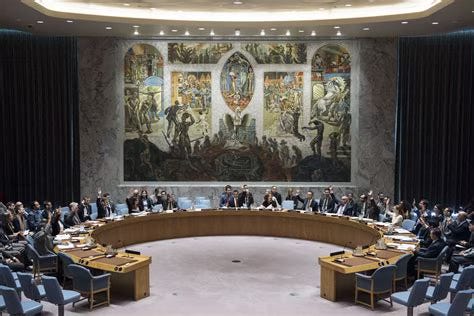
On March 11th the UN Security Council adopted a resolution on the war against Iran. Of the SC members two abstained (Russia and China) and the rest, including Colombia, voted in favour. Russia put forward its own resolution rejected by a majority of the countries, with just four votes in favour.[1]

The resolution adopted is an initiative of Bahrein, a key US proxy, and calls upon Iran to not take action against the states in the region. It says:

1. Reiterates its strong support for the territorial integrity, sovereignty and political independence of Bahrain, Kuwait, Oman, Qatar, Saudi Arabia, the United Arab Emirates, and Jordan.

2. Condemns in the strongest terms the egregious attacks by the Islamic Republic of Iran against the territories of Bahrain, Kuwait, Oman, Qatar, Saudi Arabia, the United Arab Emirates and Jordan and determines that such acts constitute a breach of international law and a serious threat to international peace and security.[2]

According to the Resolution Iran doesn’t have the right to sovereignty, nor territorial integrity and less still the right not to be attacked. It does not mention the US and Israeli aggression that began the war, in itself a clear violation of the UN Charter whose Article 2.24 reads:

All Members shall refrain in their international relations from the threat or use of force against the territorial integrity or political independence of any state, or in any other manner inconsistent with the Purposes of the United Nations.[3]

Of course it is not the first nor unfortunately will it be the last time that Israel and the US violate the Charter, but the brazenness of the UN members demanding that the country under attack not respond and blaming it for all that has occurred is perhaps new. Prior to the resolution various European countries criticised Iran harshly and demanded that it cease its attack. What they argue is that Kuwait, the UAE and the rest are not taking part in the conflict and thus are neutral and enjoy protection under the Charter which is not applied to Iran, of course. But it is not the case.

The US has bases in all of the states in the region except Iran, of course. For example, Bahrein is the location of the Headquarters of the Fifth Fleet of the US Navy. What do the toadies at the UN want? That Iran not attack the Fleet that attacks it, it would seem. The US military base is still in Bahrein for one reason only, the monarchic leadership violently put down the protests and uprising of 2011.

And what about the other states? Well, they just like Bahrein have US military bases and other necessary installations such as radar etc. In a war between countries, all military installations (with the exception of military hospitals) are a legitimate target, wherever they are. None of the Gulf monarchies can claim they are not part of the conflict. They supply the required aid without which the war would not continue, or at least would not continue in the same way. Their participation and role is not incidental or minor.

Before the war the US had around 40,000 troops in the region in all, and about 19 bases, eight of which were permanent. The “host” countries of these bases are Saudi Arabia, Bahrein, Qatar, UAE, Egypt, Kuwait, Iraq, Jordan, Oman, Syria, Turkey and of course Israel. Furthermore, it has bases in Cyprus and Greece. As the joke goes, what was Iran thinking when it put its country in the middle of all those Yankee bases?

Faced with this panorama of a ring round Iran, Colombia decided to betray the country and demand that it not defend itself and get down on its knees to the Yanks and voted in favour of the resolution. We don’t know why. Maybe when Petro bent over to Trump in his visit to Washington part of the accord was that Colombia would vote favourably on US initiatives and lend political support to its imperialist adventures. Gone is the pomp of his speech to the UN criticising the genocide in Gaza stating there is only one human race and no chosen people of god. It would seem that Iran is not part of that human race and if there is no chosen people of god as such, it is clear that according to the Colombian government there is one that is definitely not.

They have little or nothing to say in the UN of the other violations of its Charter and also International Humanitarian Law such as the attacks on hospitals and schools. Of course I am not referring to the hospitals in the USA where the poor can’t get treated because they have no money, but rather the hospitals and schools in Iran bombed by the US and Israel.

In international law Iran has a right to attack all the bases and military installations of its enemies in war i.e. the USA and Israel. Moreover, it has the right to attack any installation or body that provides a significant service to the war effort, regardless of where it is. If the banks in Dubai meet that requirement or not, we can discuss, and if bank branches also meets the requirements can also be discussed, but that debate is for everyone. The USA has attacked banks and their branches in the Iran. Are the Arab banks an important part of the war? To argue that it is not the case is not easy, but perhaps. So, why does the USA attack banks in Iran which due to the sanctions do not have the same access to the international financial markets like the UAE. We are not comparing like with like. It is like comparing the Chase Manhattan to a local credit union.

Petro’s legacy will not be his speeches to the UN but rather his support for unjustified attacks against Iran and his submission to the USA.

References

[1] See Press Release Security Council Adopts Resolution 2817 (2026) Condemning Iran’s ‘Egregious Attacks’ against Neighbours as Middle East Violence Rapidly Escalates. 

[2] See Resolution 2817 (2026) 

[3] See.

⏩ Gearóid Ó Loingsigh is a political and human rights activist with extensive experience in Latin America.
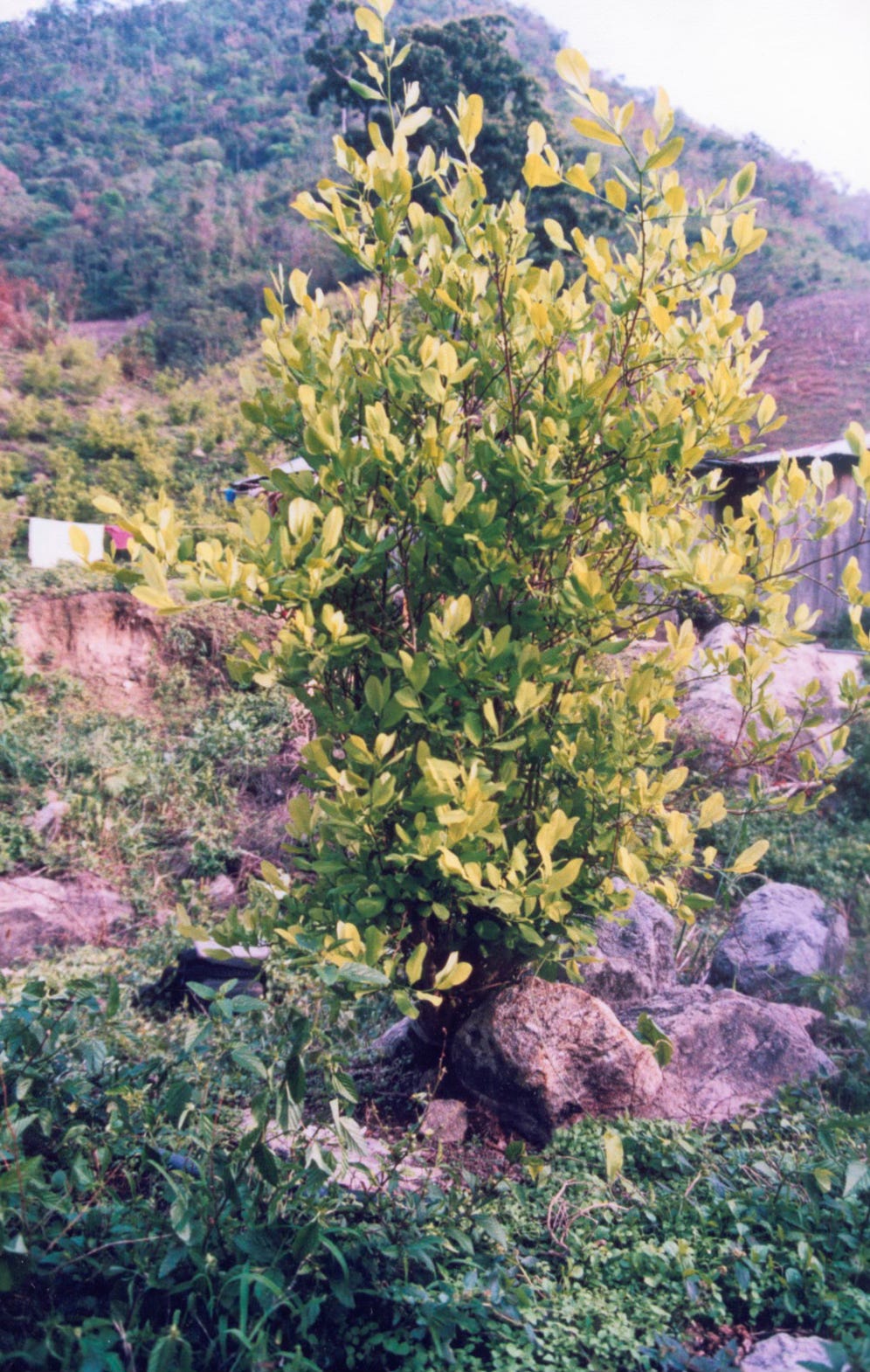
Iran Betrayed By Colombia At The UN